


There is a particular moment during the African safari – the Ndutu calving season safari when the southern Serengeti National Park plains of Tanzania become a nursery for one of the world’s greatest wildlife spectacles. Across the open grasslands of Ndutu, thousands of wildebeest gather, pregnant females prepare to give birth, newborn calves take their first steps, and predators begin following the growing herds. This is the Ndutu calving season, one of the most fascinating stages of the Great Wildebeest Migration.
Unlike the dramatic river crossings of the northern Serengeti, where survival often depends on navigating crocodile-filled rivers, Ndutu presents a different story. Here, the spectacle is about new life, maternal instinct, predator behaviour and the extraordinary ability of wildlife to respond to seasonal changes.
We often encourage visitors to look at Ndutu beyond the number of wildebeest they may encounter. What makes this destination particularly interesting is the relationship between its landscape and the migration. The short-grass plains, seasonal rainfall, volcanic soils and water sources create conditions that attract enormous concentrations of grazing animals.
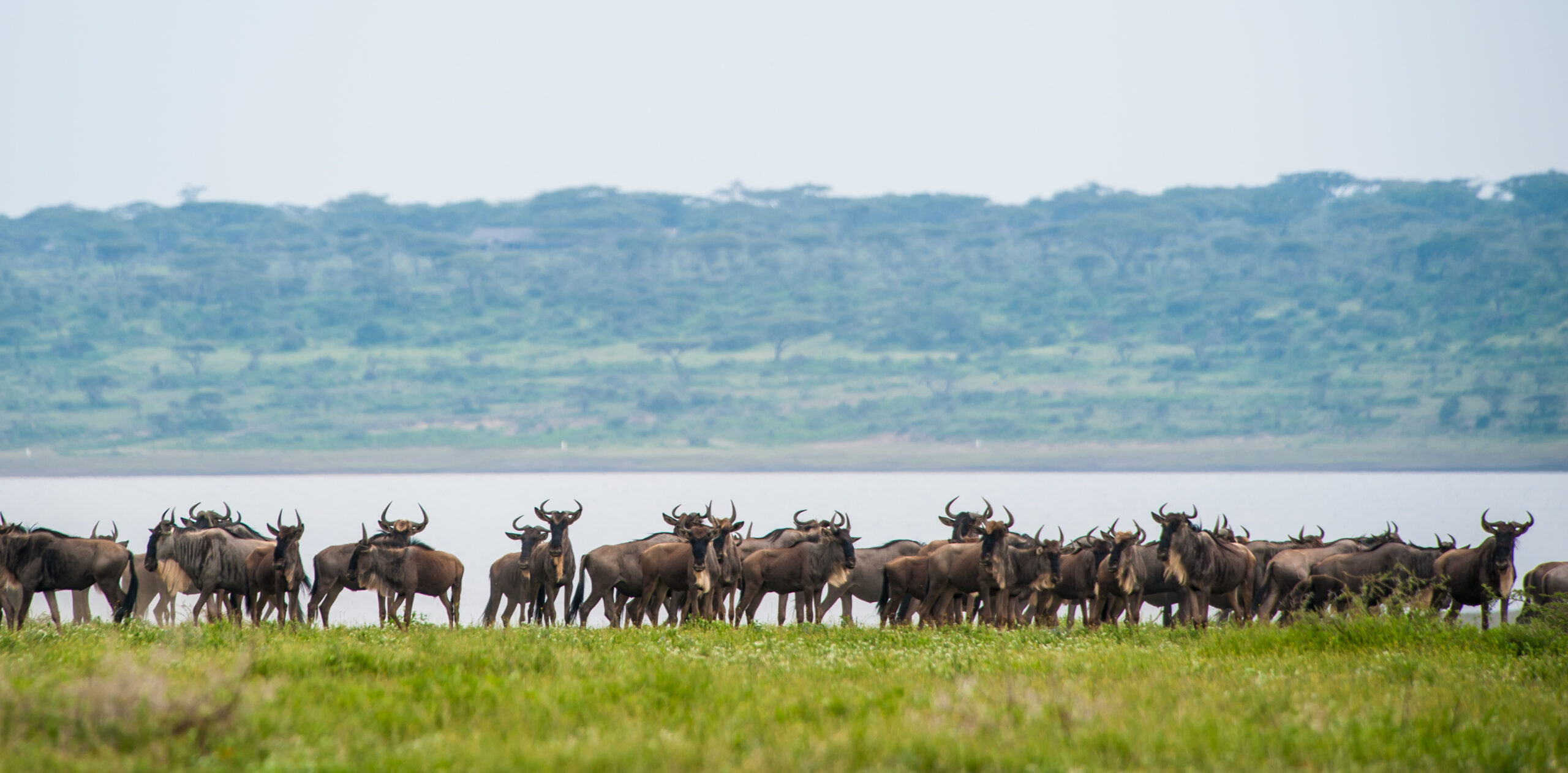
At the centre of this landscape are the plains surrounding Lake Ndutu, where the changing seasons influence the movement of wildebeest, zebras, gazelles and their predators.
Imagine driving across the southern Serengeti ecosystem as the early morning light illuminates the grasslands. Thousands of wildebeest move across the horizon, their dark silhouettes stretching towards distant hills. Among the adults, newborn calves stay close to their mothers, learning to keep pace with a herd that never seems to stand still. Nearby, a lioness rests in the grass, while a cheetah scans the open plains for its next opportunity.
A Ndutu calving season safari takes you into a landscape shaped by seasonal rainfall, fresh grazing and the extraordinary annual movement of wildebeest. Between approximately December and March, the southern Serengeti and surrounding Ndutu plains can support vast concentrations of migrating animals, including large numbers of newborn calves. The abundance of prey also attracts predators, creating opportunities to observe the natural interactions that define this remarkable ecosystem.
Yet Ndutu offers much more than dramatic wildlife encounters. Its open grasslands, seasonal lakes, scattered woodlands and expansive horizons create a distinctive safari environment. One moment, you may be watching wildebeest move across a sunlit plain; the next, you may be observing a family of elephants or discovering how a predator uses the landscape to its advantage. This is why Ndutu has become one of the most significant calving grounds of the Great Migration.
From a safari planning perspective, understanding the location matters. Ndutu is not simply another section of the Serengeti. It offers a distinctive seasonal wildlife experience, particularly during January, February, and early March. The area is also different from the Ngorongoro Crater. Although both are associated with the Ngorongoro Conservation Area, the crater is known for its resident wildlife populations and volcanic landscape, while Ndutu is especially important for the seasonal migration and calving activity.
If your main reason for visiting northern Tanzania is to witness the birth of wildebeest calves and observe the predators that follow the herds, Ndutu deserves a dedicated place in your itinerary.
At Gorilla Hour Uganda, we approach a Ndutu calving season safari with a focus on the right location, at the right time, which makes a difference. We help visitors plan around the expected movement of the herds, choose accommodation suited to their travel style, and create itineraries that leave sufficient time for meaningful wildlife encounters.
Whether you are dreaming of a luxury tented camp, a private photographic expedition, a romantic African adventure, or a wider Tanzania safari combining Ndutu with the Serengeti and Ngorongoro Crater, this Ndutu calving season safari guide will help you understand what makes the destination special and how to experience it well.
What is the Ndutu Calving Season Safari?
The Ndutu calving season refers to the period when large numbers of migrating wildebeest gather in the southern Serengeti ecosystem and surrounding Ndutu grasslands to give birth.
It is a major highlight of the Great Wildebeest Migration safari, the annual movement of wildebeest and other grazing animals across the Serengeti ecosystem and into Kenya’s Maasai Mara. The migration is driven largely by the availability of fresh grass and water, which change according to seasonal rainfall. During the southern plains’ green season, nutritious grazing attracts pregnant wildebeest and supports the development of newborn calves. For several weeks, the landscape can become a vast nursery. Calves are born in large numbers, and many must stand and begin walking shortly after birth. Staying close to their mothers and keeping pace with the herd are essential to their survival. Meanwhile, lions, cheetahs, spotted hyenas and other predators take advantage of the seasonal abundance of prey.
This combination of newborn wildlife, large herds and predator activity makes Ndutu particularly appealing to visitors interested in animal behaviour and natural history.
However, the Ndutu calving season safari allows you an opportunity to experience this section of the wildebeest migration; it is not a scheduled event that unfolds identically every year. Rainfall patterns influence when the herds arrive, where they concentrate, and how long they remain in particular areas.
Consequently, a successful Ndutu calving season safari begins with understanding the seasonal pattern while allowing enough flexibility for nature to determine the details.
Why Ndutu is Important to the Great Migration?
Ndutu lies within the wider southern Serengeti ecosystem, close to the boundary between Serengeti National Park and the Ngorongoro Conservation Area. Its grasslands and surrounding habitats become especially valuable when seasonal rainfall produces nutritious grazing. The area can then support large concentrations of wildebeest during the calving period.
The southern plains are important because the nutritional quality of available forage influences the condition of pregnant females and their ability to support their young.
The resulting concentration of animals also creates a seasonal food source for predators, making the region particularly interesting for wildlife observers.
For visitors, this means that a Ndutu calving season safari offers a different perspective on the Great Migration from the famous river crossings of the northern Serengeti.
Rather than focusing on herds crossing deep channels, you are entering a landscape where birth, early survival, grazing, and predator behaviour shape the daily wildlife experience.
Related guide: Serengeti Calving Season Safari: Witness the Great Wildebeest Migration
Lake Ndutu: The Seasonal Heart of the Calving Plains
When discussing the Ndutu calving season, it is impossible to overlook Lake Ndutu itself. This shallow alkaline lake is one of the defining natural features of the area and contributes to the ecological character of the surrounding landscape. Unlike a deep freshwater lake with permanently high water levels, Lake Ndutu is a shallow lake whose appearance and extent change with seasonal rainfall and evaporation. During wetter periods, water spreads across parts of the lake basin, creating suitable conditions for waterbirds and other wildlife. During drier periods, water levels may fall, exposing sections of the shoreline and changing the appearance of the surrounding environment.
The lake is part of a wider landscape that includes open grasslands, scattered acacia trees and seasonal water sources. This combination of habitats makes Ndutu attractive to both resident wildlife and migrating animals.
What Is a Ndutu Calving Season Game Drive Like?
A Ndutu calving season safari is different from a conventional game drive focused on finding individual animals. Here, your guide is following a much larger ecological event. The position of the herds, the direction of movement, predator activity, and changing weather conditions all influence where you spend the day. An early morning departure is usually recommended. The first hours of daylight offer excellent opportunities for photography and wildlife observation. Predators may still be active, while large herds begin moving across the plains.
During the game drive, you are likely to encounter: Large wildebeest herds stretching across the plains, Newborn calves standing beside their mothers, Zebras and gazelles feeding among the wildebeest, Lions resting or moving through the grasslands, Cheetahs scanning the open terrain, Hyenas searching for food. Birds of prey circling overhead, Waterbirds around Lake Ndutu and other seasonal wetlands. To make the most of the safari, full-day game drives with a picnic lunch are recommended.
Best Time for Ndutu Calving Season Safari?
The Ndutu calving season generally falls between December and March, with January and February often providing particularly rewarding opportunities to see newborn wildebeest.
However, the best time for your safari depends on the timing of seasonal rainfall, the distribution of the herds, and your particular wildlife interests.
Here is what to consider when choosing your travel dates.
Ndutu in December: Herds starting to arrive
December is an exciting time to explore the southern Serengeti as the landscape responds to seasonal rainfall.
Fresh grazing may attract migrating wildebeest towards the southern plains, while the wider ecosystem begins to support the concentrations of wildlife associated with the calving season. important to note that the landscape can be beautifully green, creating attractive conditions for photography and wildlife viewing. Travelling in December allows you to encounter large herds and catch the developing calving period, although the timing and density of wildlife vary from year to year.
Ndutu in January: A Season of New Life
January is often an excellent month to plan a Ndutu calving season safari. This month has favorable conditions and substantial concentrations of wildebeest that gather across the southern plains, and newborn calves become an increasingly prominent feature of the landscape.
Game drives can provide opportunities to observe mothers with their young, large herds moving across open grassland and predators searching for prey.Lions may be seen resting or moving near grazing herds, while cheetahs use the open terrain to scan for hunting opportunities.
For photographers, January can offer compelling scenes of wildlife against expansive grasslands, particularly when the light is soft during early morning and late afternoon.
Nevertheless, the precise location of the herds remains dependent on environmental conditions.
Ndutu in February: Peak Calving-Season Experiences
February is widely considered one of the prime months for experiencing the wildebeest Ndutu calving season safari. In this month, large numbers of calves may be born across the southern plains, while the abundance of grazing animals creates opportunities to observe a variety of predator behaviours.
The experience is about more than witnessing dramatic hunts. You may spend time watching newborn calves remain close to their mothers, observing herds moving together or learning how different animals respond to the changing conditions around them. The open grasslands can also make it easier to observe wildlife at a distance, although sightings always depend on where animals are located and what they are doing.
If your main objective is to experience the calving season, we recommend allowing several nights in the Ndutu area rather than treating it as a brief stop between destinations.
Ndutu in March: Following the Changing Herds
March can continue to provide rewarding wildlife viewing, although the distribution of wildebeest may change as the season progresses. Some areas may still support substantial concentrations of animals, while other herds may begin moving towards different grazing grounds.
Rainfall and the condition of the grasslands influence these movements; the concentrations of wildebeest change through the month. March can be a worthwhile option for visitors with flexible travel dates, particularly when the itinerary is designed around current conditions. This is for visitors who can remain want to explore the southern Serengeti during the later part of the main calving-season window.
Which Month Should You Choose?
If your primary objective is to see newborn wildebeest, January and February are strong starting points. December offers opportunities to experience the herds gathering in the south, while March may still deliver excellent sightings depending on seasonal conditions.
Related guides:
Serengeti Calving Season in January
Serengeti Calving Season in February
Serengeti Calving Season in March
Where Exactly Is Ndutu?
Ndutu is located in northern Tanzania, within the southern Serengeti ecosystem near the boundary between Serengeti National Park and the Ngorongoro Conservation Area.
The region includes open grasslands, seasonal lakes, woodland, and other habitats that support a wide variety of wildlife.
Although Ndutu is commonly discussed alongside the Serengeti, it is important to understand that parts of the wider Ndutu area fall within the Ngorongoro Conservation Area rather than Serengeti National Park. This distinction matters when choosing your accommodation and planning game drives because different locations are subject to different conservation fees, access arrangements and regulations.
The broader ecological landscape matters more than the administrative boundary alone. The herds move across the wider ecosystem according to seasonal conditions, and the most suitable location for your safari depends on where the animals are concentrated during your visit.
What Makes the Ndutu Landscape Unique?
Ndutu is characterised by broad grasslands and open horizons that can provide excellent opportunities for wildlife viewing. Seasonal rainfall changes the appearance and productivity of the plains. When fresh grass becomes available, grazing animals may gather in substantial numbers.
The region also includes woodland and seasonal water sources, creating habitat diversity beyond the open grasslands.
These contrasting environments support different species and can make game drives varied even when your itinerary focuses on one geographical area; it is appealing to all visitors.
For photographers, the landscape offers opportunities to capture animals against open skies, soft morning light, and green grasslands after rain.
For wildlife enthusiasts, it provides a setting in which the relationships between grazing animals, predators and their environment are particularly visible.
Is Ndutu the Best Place to See Predator Action During Calving Season?
Ndutu is among the most rewarding areas for observing predator-prey interactions during the calving season because large concentrations of wildebeest can attract a variety of carnivores.
However, predator activity depends on several factors, including prey distribution, weather, vegetation and the behaviour of individual animals. A good safari therefore requires patience and flexibility rather than driving constantly in search of dramatic encounters; an experienced guide may recommend spending time in an area where wildlife activity is promising.
This allows you to observe natural behaviour as it unfolds, whether that means watching lions resting near a herd, following a cheetah’s movements, or observing hyenas interacting with one another.
What Makes Predator Sightings Special in Ndutu?
The open terrain can make it easier to observe animals at a distance than in some densely vegetated habitats. During the calving season, the presence of large herds can also create opportunities to see different species within the same area.
Nevertheless, a predator sighting is not a guarantee of a hunt, and hunts themselves are unpredictable.
At Gorilla Hour Uganda, we encourage visitors to appreciate the full range of wildlife behaviour rather than measuring a safari solely by dramatic encounters. Sometimes the most meaningful moment is simply watching an animal behave naturally in its environment.
The Wildlife You Can See on a Ndutu Calving Season Safari
Wildebeest are the principal attraction, but the region supports a much wider range of wildlife. The seasonal concentration of grazing animals creates excellent opportunities to observe predators, herbivores and birdlife within the same landscape.
Wildebeest: The Stars of Ndutu: The wildebeest are at the centre of the calving-season experience. During favourable conditions, large herds spread across the plains, grazing, moving between feeding areas and gathering in groups.
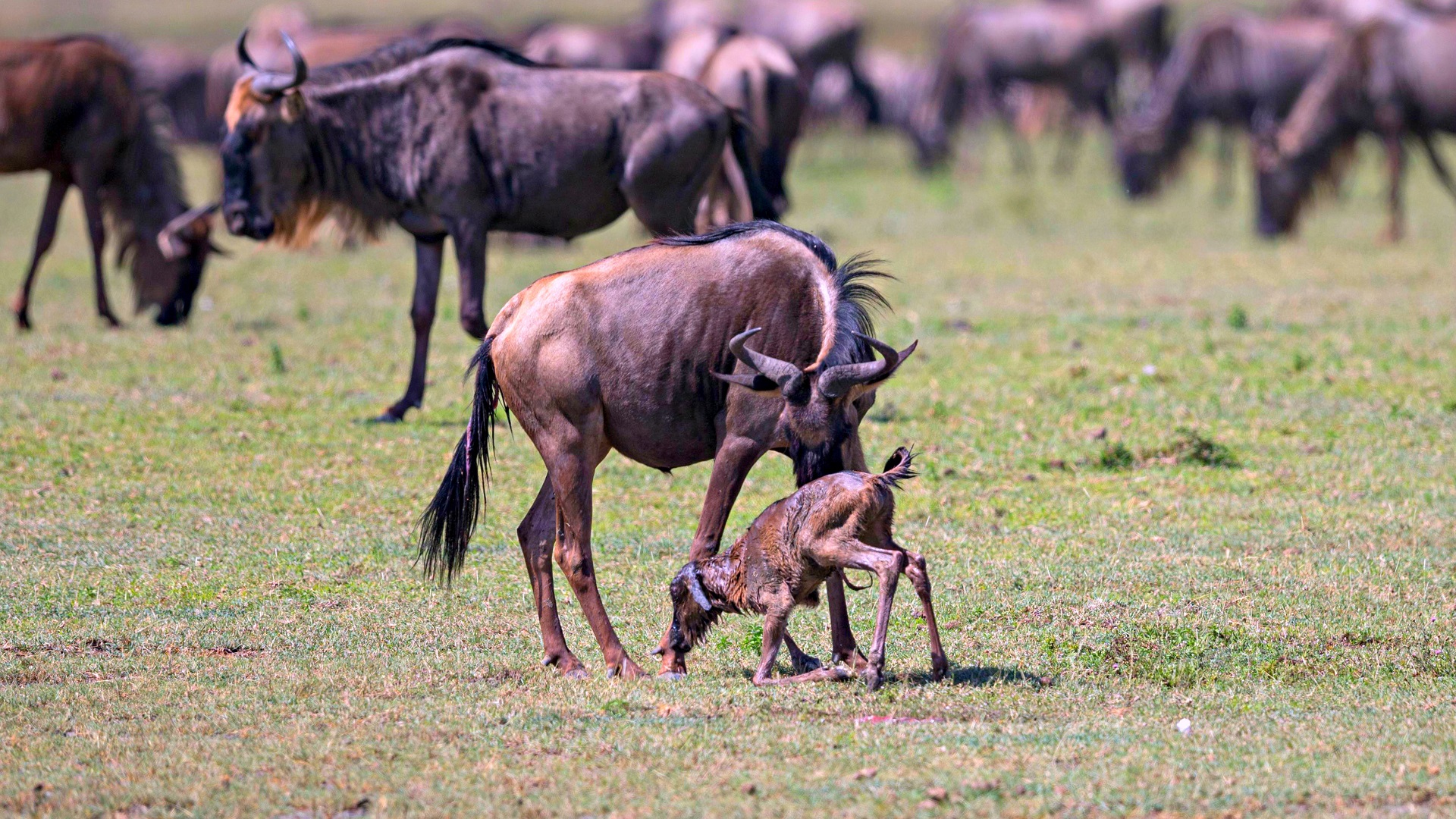
The arrival of newborn calves adds a particularly engaging dimension to the experience. You may observe calves staying close to their mothers, attempting to keep up with the herd or resting while adults graze nearby. Wildebeest are highly adapted to life on open grasslands, but the early days of a calf’s life remain challenging.
The need to move with the herd, avoid predators, and remain close to the mother makes this period critical to survival. With our experienced guides, they assist you in making meaningful observations, where you begin to understand the behaviours taking place around you.
Lions: Watching the Predators of the Plains
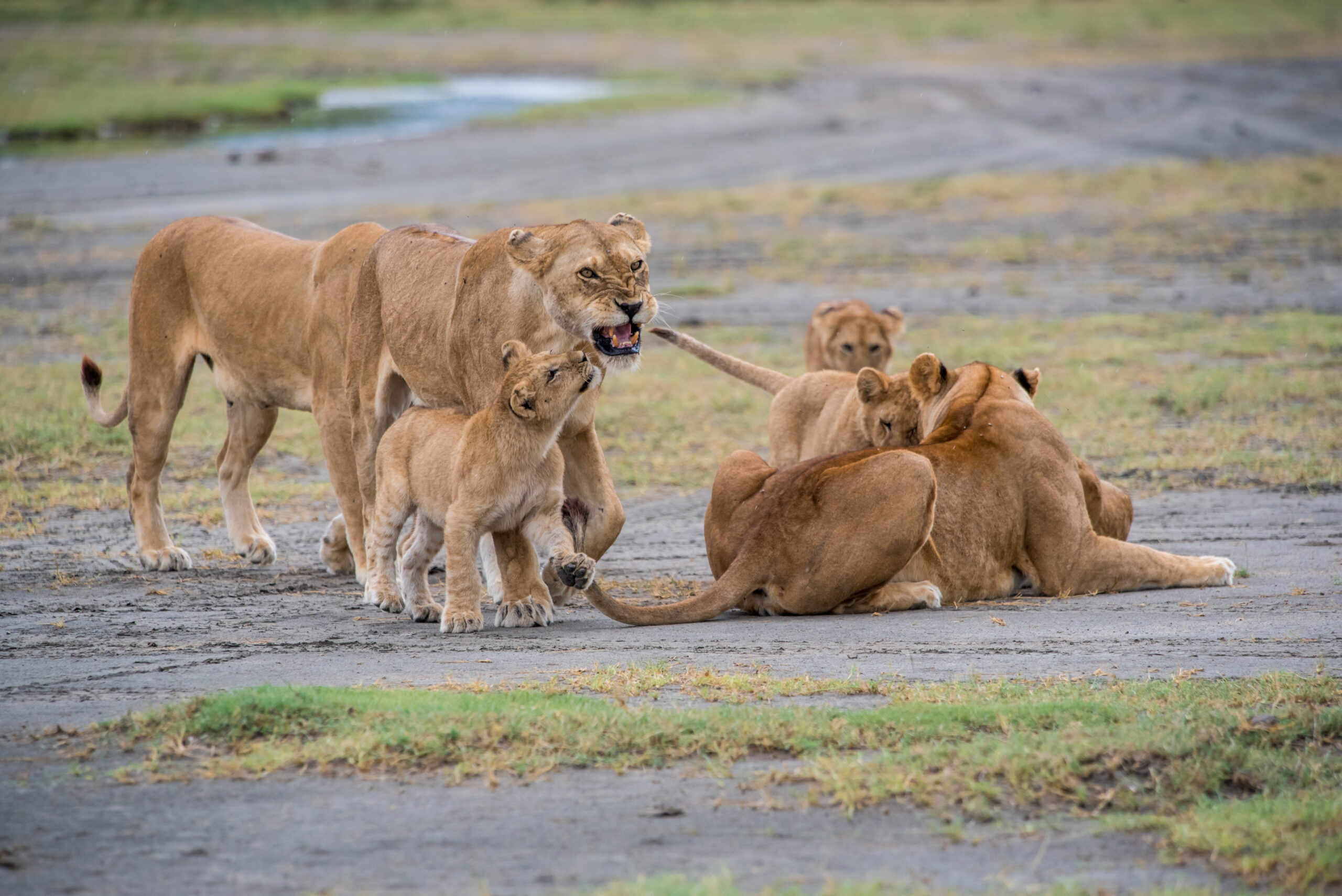
Lions are among the most sought-after animals during a Ndutu calving season safari. The abundance of prey during calving season can create favourable hunting opportunities, attracting lions to areas where wildebeest gather. You may encounter a pride resting in the shade, moving through the grass, or watching herds from a distance.
A lion sighting does not need to involve a hunt to be rewarding. Observing social interactions, territorial behaviour, or the movements of a pride can provide valuable insight into the lives of these powerful predators. Predator behaviour is unpredictable, and responsible guides avoid disturbing animals in pursuit of a dramatic encounter.
Cheetahs: Speed and Strategy on Open Grassland
The open plains around Ndutu provide suitable habitat for cheetahs, which rely on keen eyesight and speed to hunt. During calving season, the concentration of young wildebeest may create opportunities for cheetahs to hunt, although the success and frequency of such encounters vary. Watching a cheetah scan the horizon, move cautiously through the grass or interact with its surroundings can be fascinating in its own right.
For photographers, the open landscape can provide attractive backgrounds and opportunities to observe the animal’s distinctive movements.
Spotted Hyenas: Skilled Hunters and Scavengers
Spotted hyenas are an important part of the Serengeti ecosystem. They are capable hunters as well as scavengers, and they play a significant role in the natural food web. During calving season, they may be seen moving through the plains, searching for food or interacting with other predators. Hyenas are adaptable animals with sophisticated social structures, and observing them can add depth to your understanding of the Serengeti.
Zebras: Companions of the Migration
Zebras frequently accompany wildebeest during their movements across the plains. The two species have different feeding preferences, allowing them to use grassland resources in complementary ways. Zebras are also striking photographic subjects, particularly when their black-and-white patterns contrast with green grass or golden afternoon light.
Their presence reinforces the fact that the Great Migration involves a wider community of animals rather than wildebeest alone.
Elephants and Giraffes
Elephants and giraffes may be encountered in suitable habitats around the wider Ndutu region. Their presence adds variety to game drives, especially when the itinerary includes woodland and areas beyond the main concentrations of wildebeest.
Sightings depend on location, season and natural movements, so they should be treated as possibilities rather than guarantees.
Birds of the Southern Serengeti
Ndutu is also interesting for birdwatchers. The combination of grasslands, seasonal water sources and woodland supports a variety of bird species, including birds of prey and other species associated with open country. Depending on the time of year and local conditions, visitors may encounter ostriches, secretary birds, vultures, eagles and numerous smaller birds. If birding is important to you, it’s important you let us know, so we can plan well. Your guide can help incorporate birdwatching into game drives without losing sight of the calving-season experience.
Can You Witness Wildebeest Giving Birth in Ndutu?
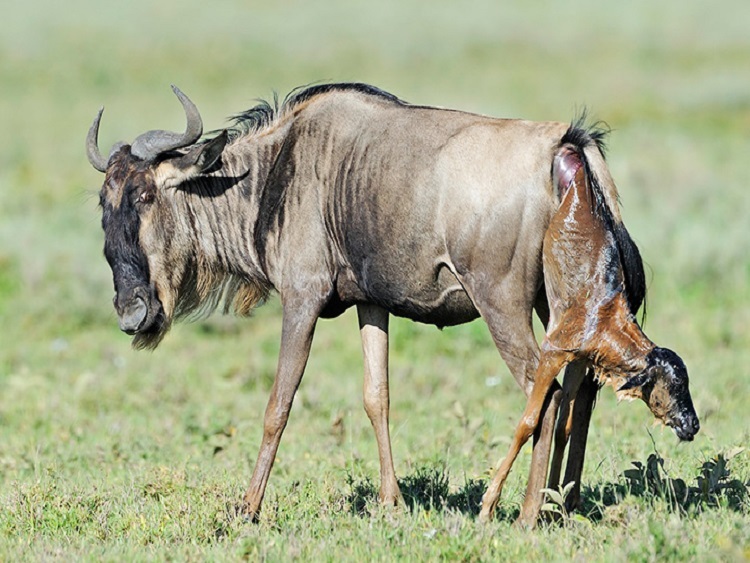
Yes, it is possible to witness a wildebeest birth during the calving season, although no safari operator can guarantee that you will see one. The concentration of births across the southern plains increases the opportunity to observe newborn calves and their mothers. However, individual births occur unpredictably, and the exact location of an event depends on where the animals happen to be.
Even without witnessing a birth, visitors may observe calves shortly after they are born, mothers keeping their young close or herds moving across the plains. These moments can be equally memorable because they reveal the behaviour that helps wildebeest survive in a landscape shared with predators.
Why Do Wildebeest Give Birth in the Southern Plains?
Seasonal rainfall helps produce nutritious grazing that supports pregnant females and lactating mothers. The concentration of births also means that many calves enter the world during a period when suitable food is available. Large numbers of calves may create a seasonal abundance of prey for predators, but individual calves still face considerable challenges during their early days. This is part of the natural balance that makes the Ndutu calving season safari so fascinating. This experience offers an opportunity to understand how reproduction, grazing, migration, and predator behaviour are connected within a single ecosystem.
Ndutu Safari for Wildlife Photography
For wildlife photographers, Ndutu offers a compelling combination of open landscapes, large herds, newborn animals, and predators. The southern plains can provide opportunities for both close wildlife portraits and wider images that communicate the scale of the migration.
What Can You Photograph?
Newborn wildebeest: Capture the relationship between mothers and calves, particularly when the animals are moving or resting together.
Massive herds: Use the open horizon to show the scale of the migration.
Predators: Photograph lions, cheetahs and hyenas when sightings provide suitable opportunities.
Wildlife behaviour: Focus on movement, feeding, social interactions and other natural activities.
Landscape compositions: Use the light, grasslands and distant horizons to place animals within their environment.
Best times are early mornings and late afternoons, which often provide attractive photographic light. These times are also rewarding for wildlife viewing, although animal activity varies and sightings may occur throughout the day. If photography is your primary objective, consider the length of your safari carefully. More nights in the right area can provide greater flexibility than a short itinerary covering several distant destinations.
Where to Stay During the Ndutu Calving Season Safari
Accommodation location is one of the most important decisions when planning a Ndutu calving season safari. During the calving season, wildlife movements can change from one part of the plains to another. Staying in the right area reduces unnecessary driving and gives you more time to explore the migration grounds.
Ndutu has a selection of permanent lodges and seasonal tented camps, while additional accommodation options are available in the surrounding southern Serengeti.
Some properties to consider include:
Ndutu Safari Lodge: Ndutu Safari Lodge is one of the established accommodation properties in the area. Its location makes it a recognized base for exploring the surrounding plains, particularly during the migration season.
Lake Masek Tented Lodge: Located in the wider Ndutu region near Lake Masek, this property offers a tented safari atmosphere. Its location can be attractive for guests exploring the southern plains and surrounding wildlife areas.
Ndutu Luxury Lake Masek Tented Lodge: This is another option for travellers seeking a more comfortable tented accommodation experience in the wider Ndutu landscape.
Seasonal Mobile Tented Camps: Mobile camps are particularly interesting during the Great Migration because they can be positioned to provide access to important wildlife areas. Their seasonal location can make them attractive to travellers who want to spend more time near the migrating herds.
However, not every camp operates in the same location or for the same dates. It is important to confirm seasonal arrangements before booking.
Why Camp Location Matters
One thing I always emphasize when planning a Ndutu safari is that accommodation should be selected according to the wildlife experience you want. If the calving season is your main reason for visiting, I recommend prioritizing accommodation with practical access to the southern plains and the Lake Ndutu–Lake Masek area.
We help visitors compare available accommodation according to the travel dates, preferred comfort level, and safari budget during the safari planning.
Related guide: The Best Places to Stay in Ndutu During Calving Season.
How Do You Get to Ndutu?
Most international travellers reach northern Tanzania through Kilimanjaro International Airport; others prefer to arrive at Jomo Kenyatta Airport in Nairobi and transfer to Arusha, then proceed to Ndutu. The most practical route depends on your flight arrangements, starting location, budget, and whether you prefer to travel by road or use a scheduled or charter flight.
Travelling to Ndutu by Road: You will transfer from Arusha to Ndutu. The advantages include flexibility and the opportunity to explore several areas during one journey.
However, driving distances and journey times can be substantial, and actual travel times depend on road conditions, stops and the exact location of your accommodation.
Flying to the Ndutu Region
Scheduled flights are available from Arusha to Ndutu airstrip serving the Ndutu area. Fly-in arrangements can reduce time spent travelling by road and provide an efficient option for shorter or higher-end safaris.
Road Versus Flying – Which Option Is Better?
Road travel may suit travelers planning a broader northern Tanzania circuit. Flying may be preferable when time is limited or when you want to maximise your stay in the wildlife area.
The best choice depends on your complete itinerary, not simply the distance between two points.
At Gorilla Hour Uganda, we consider the arrival arrangements, accommodation and game-drive schedule together to help you choose a practical route.
How Much Does a Ndutu Calving Season Safari Cost?
The cost of a Ndutu calving season safari depends on your accommodation, travel dates, number of nights, group size, and transport arrangements.
Because January and February are popular months for the calving season, demand for well-positioned camps can be high.
Booking early is particularly helpful if you want a specific property or plan to travel during a busy period.
What Influences the Price?
Accommodation category: Luxury tented camps generally cost more than mid-range properties or budget camping.
Number of nights: Longer safaris increase accommodation and guiding costs but also provide more opportunities for wildlife viewing.
Transport: Road safaris and fly-in itineraries have different cost structures.
Group size: Private arrangements can have different per-person costs from shared trips.
Conservation and park fees: Applicable fees contribute to the overall safari price.
Additional destinations: Adding Ngorongoro Crater, other Serengeti regions or Zanzibar increases the total cost.
Is a Luxury Ndutu Safari Worth It?
A luxury safari may be worthwhile if you value privacy, comfort, attentive service and carefully coordinated logistics.
However, the quality of a wildlife experience also depends on the location of the accommodation, the knowledge of your guide and the amount of time available.
A well-planned mid-range safari can also offer excellent wildlife viewing.
Our recommendation is to begin with your budget and priorities. We can then help you compare options and identify where additional expenditure will make the greatest practical difference.
Request a tailored Ndutu safari quotation from Gorilla Hour Uganda.
How Many Days Should You Spend in Ndutu?
The right duration depends on whether Ndutu is the main purpose of your visit or one stop within a longer Tanzania itinerary.
3-Day Ndutu Safari
A three-day safari may suit travellers with limited time, particularly when transport arrangements allow them to reach the area efficiently.
The itinerary should focus on the main wildlife-viewing opportunities rather than attempting to cover too many destinations.
4-Day Ndutu Calving Season Safari
Four days can offer a more comfortable balance between travel and game drives.
Depending on arrival and departure times, the itinerary may provide several opportunities to explore different parts of the region.
5-Day Ndutu and Southern Serengeti Safari
Five days allows greater flexibility for exploring the wider southern Serengeti ecosystem.
You may have more time to follow wildlife movements, photograph animals and enjoy unhurried game drives.
6- to 7-Day Northern Tanzania Safari
A longer itinerary may combine Ndutu with additional parts of the Serengeti and Ngorongoro Conservation Area.
This offers more variety but requires careful planning to ensure that travel between destinations does not reduce the time available for the calving season.
Our Recommendation
If the primary reason for your visit is to experience wildebeest calving, consider allowing at least three or four nights in or near the relevant wildlife area, depending on your arrival arrangements.
For photographers and travellers who prefer a slower pace, additional nights can be valuable.
Can You Combine Ndutu with Ngorongoro Crater?
Yes. Ndutu and Ngorongoro Crater can form a compelling combination for travellers who want to experience the calving season and explore another important wildlife destination.
Ndutu focuses on the seasonal gathering of wildebeest and the ecological events associated with calving.
Ngorongoro Crater offers a different experience, with a remarkable concentration of wildlife in a distinctive volcanic landscape.
Combining the two can provide a broader introduction to northern Tanzania’s wildlife.
However, your itinerary should preserve sufficient time in Ndutu if witnessing the calving season is your main objective.
A common mistake is to add too many destinations without accounting for the time needed to travel between them.
A carefully paced itinerary generally provides a more rewarding experience than one that attempts to include every famous location in a few days.
Related guide: Serengeti Calving Season and Ngorongoro Crater Safari.
Can You Combine Ndutu with Zanzibar?
Absolutely. A Ndutu safari followed by a Zanzibar beach holiday is an excellent option for travellers who want to balance wildlife exploration with relaxation.
After early mornings and game drives across the plains, Zanzibar offers a change of pace with Indian Ocean scenery, beaches, cultural experiences and opportunities to unwind.
A typical itinerary may begin with several days in Ndutu, continue to another northern Tanzania destination if time allows, and finish with a flight to Zanzibar.
The ideal route depends on your travel dates, flight availability and the number of days you have available.
For honeymooners and couples, the combination can be particularly appealing because it offers both adventure and time to relax.
Let Gorilla Hour design your Ndutu and Zanzibar holiday around your preferred travel dates and style.
Can You Combine Ndutu with Gorilla Trekking in Uganda or Rwanda?
Yes. Travellers who want to experience several of East Africa’s most remarkable wildlife destinations can combine the Ndutu calving season with mountain gorilla trekking in Uganda or Rwanda.
The contrast is extraordinary.
Ndutu introduces you to the vast landscapes of the Great Migration, where large herds move across open grasslands.
Gorilla trekking takes you into forested mountain habitats, where experienced trackers help locate a habituated mountain gorilla family.
Ndutu and Uganda Gorilla Trekking
A Uganda combination safari may include gorilla trekking in Bwindi Impenetrable National Park or Mgahinga Gorilla National Park, followed by a journey to Tanzania.
Depending on the length of your holiday, you may also include chimpanzee tracking or other wildlife experiences in Uganda.
Ndutu and Rwanda Gorilla Trekking
A Rwanda combination can include mountain gorilla trekking in Volcanoes National Park before continuing to Tanzania.
This can suit travellers seeking a focused gorilla trekking experience combined with a classic African wildlife safari.
Planning the Combination
The itinerary must account for flights, transfers, gorilla permits, accommodation and the time required for each activity.
Your available dates are particularly important because the Ndutu calving season is seasonal, while gorilla trekking requires separate permit arrangements.
At Gorilla Hour Uganda, we help travellers bring these experiences together into one coherent East African itinerary.
Is Ndutu Suitable for Families and First-Time Safari Travellers?
Ndutu can be an excellent destination for families and first-time safari travellers who want to experience the Great Migration in a wildlife-rich setting.
The large herds provide plenty to observe, while newborn animals can help children understand the relationships between wildlife, habitats and survival.
A family itinerary should be designed around the ages of the children, the length of travel days and the facilities available at the accommodation.
Private transport may provide additional flexibility, allowing your guide to adjust the pace and take breaks when necessary.
First-time safari travellers should also understand that wildlife viewing involves uncertainty. Animals move freely, and not every game drive will produce the same sightings.
A knowledgeable guide can help interpret what is happening and make the most of the opportunities available.
Responsible Safari Practices in Ndutu
The calving season is a time when large numbers of vulnerable young animals share the plains with predators.
Responsible wildlife viewing is therefore essential.
Visitors should follow their guide’s instructions, maintain appropriate distances and avoid disturbing animals.
Vehicles should not block wildlife movements or crowd animals simply to secure a photograph.
Never attempt to touch, feed or approach wild animals.
Photographers should also avoid pressuring guides to pursue a sighting when doing so could disturb wildlife or compromise safety.
Responsible travel helps preserve the natural behaviour that makes Ndutu such a remarkable destination.
At Gorilla Hour Uganda, we believe a meaningful safari respects the animals, habitats and conservation areas that make the experience possible.
Why Book Your Ndutu Calving Season Safari with Gorilla Hour Uganda?
A successful calving-season safari depends on bringing together several important elements: seasonal timing, accommodation location, guiding, transport and a realistic understanding of wildlife movements.
At Gorilla Hour Uganda, our approach is to help you plan those elements around your interests and expectations.
Personalised Itineraries
Your safari can be tailored to your preferred dates, budget, accommodation category and wildlife interests.
Whether you are travelling as a couple, family, photographer or dedicated wildlife enthusiast, we help you explore the options that best suit your plans.
Wildlife-Focused Planning
We recognise that a calving-season safari should be organised around the expected distribution of the herds.
This means considering the timing of your visit and the suitability of your accommodation and route, rather than relying on a generic itinerary.
Flexible Accommodation Options
We can help you consider luxury tented camps, mid-range accommodation and budget camping arrangements according to your travel style.
The goal is to match comfort and value with the wildlife experience you want.
East African Safari Combinations
Your journey does not have to end in Tanzania.
Depending on your interests, you can explore combinations involving Uganda or Rwanda gorilla trekking, the Serengeti and Zanzibar.
We help you consider the practical arrangements and create an itinerary that gives each destination sufficient time.
Attention to the Details
Transfers, flights, accommodation and game drives all influence the quality of your safari.
Our planning process focuses on bringing these components together so that your holiday feels coordinated and well paced.
A Clear Planning Process
We help you understand the available options, compare arrangements and establish what is included before confirming your trip.
Our goal is to make planning straightforward while creating an experience that reflects your interests.
Your Ndutu safari should be more than a list of destinations. It should be a journey designed around the wildlife and experiences you most want to discover.
Whether you prefer a luxury photographic expedition, a private migration safari or a wider Tanzania adventure combining Ndutu, Serengeti and Ngorongoro, Gorilla Hour can design the journey around your interests.
Speak to a Safari Expert Today
Gorilla Hour – Gorilla Tracking Specialists & Wildlife Expedition Experts
Wildly Close to Gorillas. Wildly Close to Nature. Wildly Close to Africa.


