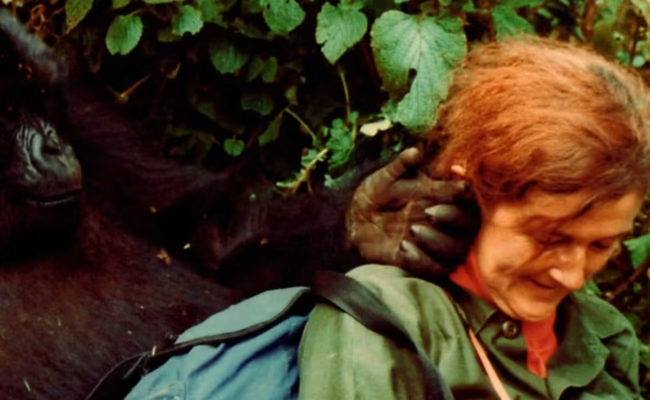
The Historic Karisoke Research Center, Rwanda
Discover the Birthplace of Mountain Gorilla Conservation in Volcanoes National Park
Gorilla Hour guides you into Karisoke Research Center’s & Dian Fossey’s legacy. The birthplace of mountain gorilla conservation at the legendary Karisoke Research Center in Rwanda’s Volcanoes National Park. Here you will discover where Dian Fossey transformed the world’s understanding of mountain gorillas, pioneered groundbreaking research, and inspired one of conservation’s greatest success stories. Experience this remarkable legacy with Gorilla Hour Dian Fossey Tours in Rwanda.
Hidden high within the mist-covered Virunga Mountains in Volcanoes National Park, Rwanda, the Karisoke Research Center is one of Africa’s most important conservation landmarks. Established in 1967 by renowned primatologist Dian Fossey, the research station became the world’s leading center for mountain gorilla research and protection.
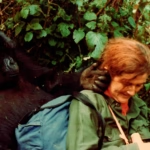
Although simple in appearance, Karisoke changed conservation forever. Here, Dian Fossey spent nearly two decades observing mountain gorillas in their natural habitat, documenting their complex social lives, identifying individual gorillas by their nose prints, and proving that these gentle giants were intelligent, peaceful, and deeply family-oriented.
Today, visitors to Volcanoes National Park are able to visit the historic site where modern mountain gorilla trekking and conservation began through a Hike to Dian Fossey’s Grave tour offered by Rwanda Tourism Board all year round.
Hike to Dian Fossey’s Grave Tour – Karisoke Research Center
Today, visitors can hike through the park to reach the historic Karisoke site known as the Dian Fossey tour. It is a guided hike that takes place in Rwanda’s spectacular Volcanoes National Park. The Dian Fossey Hike is one of East Africa’s most inspiring conservation experiences. On the tour, you journey through lush bamboo forests, giant heather, and volcanic slopes with breathtaking views of the Virunga Mountains to the historic Karisoke Research Center, where renowned primatologist Dian Fossey dedicated nearly two decades to studying and protecting endangered mountain gorillas. Along the way, experienced guides share the remarkable story of her groundbreaking research, the famous silverback Digit, and the conservation efforts that transformed Rwanda into a global leader in mountain gorilla protection. The trail concludes at her gravesite and the former location of the Karisoke Research Center.
Perfectly paired with luxury gorilla trekking safaris and tailor-made Rwanda safari experiences, the Dian Fossey Tour offers a deeper understanding of the wildlife, history, and conservation legacy that make Volcanoes National Park one of Africa’s most extraordinary destinations. Explore this unforgettable journey with Gorilla Hour and walk in the footsteps of a conservation legend.
What is Karisoke Research Center and Why is it named
The Karisoke Research Center was established on 24 September 1967 between Mount Karisimbi and Mount Bisoke in Rwanda’s Volcanoes National Park.
The name “Karisoke” was an acronym that combined the names of the two volcanoes: Kari – Mount Karisimbi and Soke – Mount Bisoke.
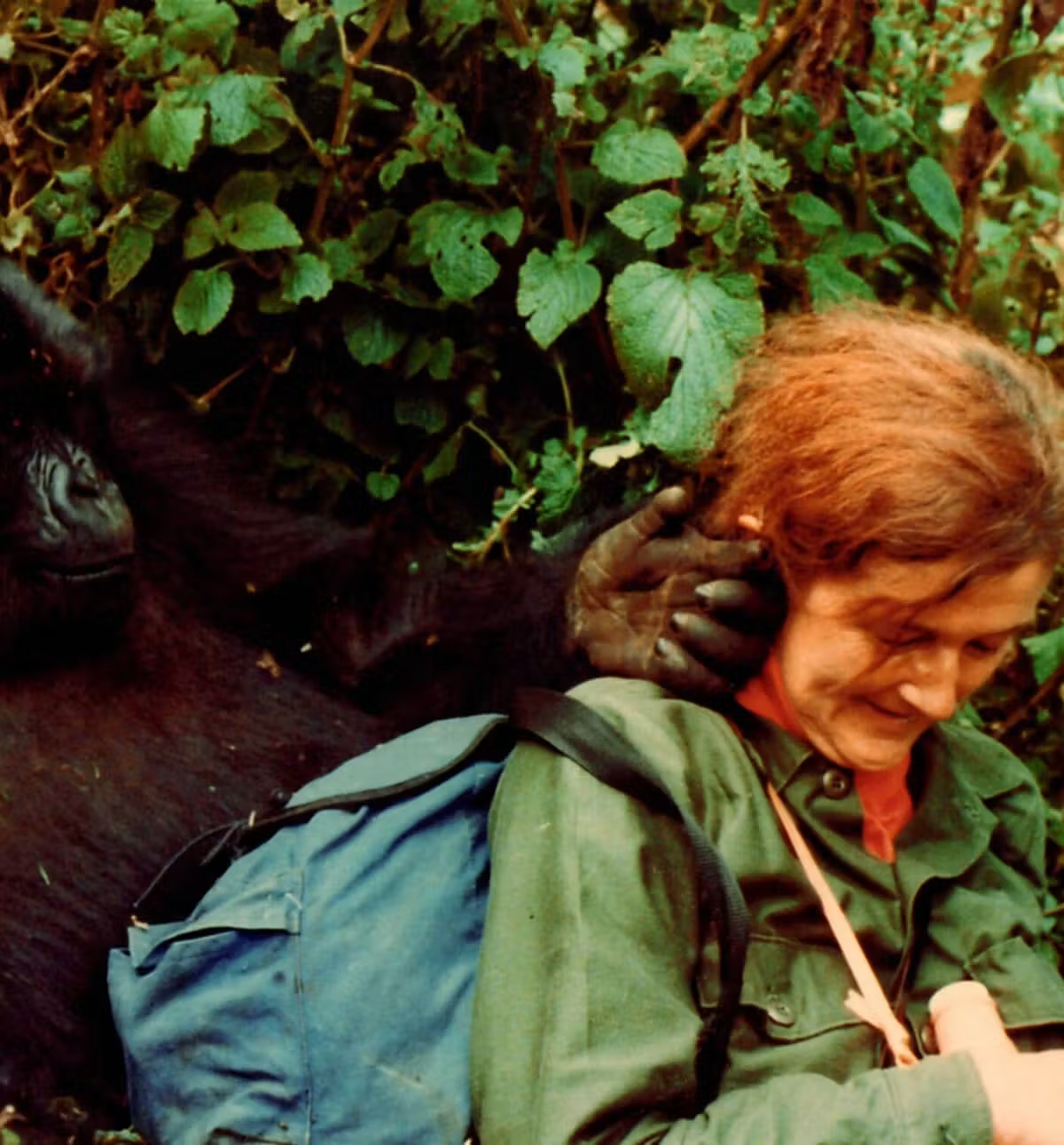
The isolated location allowed Fossey to observe mountain gorillas in their natural environment with minimal human disturbance, as the center placed researchers in the heart of mountain gorilla habitat, allowing long-term observation without significantly disturbing the animals. Her patient, long-term research fundamentally changed the world’s perception of gorillas, proving they were intelligent, gentle, and deeply social animals rather than the aggressive creatures many once believed them to be. This pioneering approach transformed the study of great apes and became a model for wildlife research around the world.
Today, Karisoke is recognized as the birthplace of mountain gorilla conservation and remains one of the most significant wildlife research sites in Africa.
Why Did Dian Fossey Establish Karisoke?
When Dian Fossey first arrived in Rwanda, very little was known about mountain gorillas, and the population of Mountain gorillas was fewer than 300 mountain gorillas believed to survive in the wild at the time because of poaching, habitat destruction, and political instability that greatly threatened the rare species with extinction. The Virunga Mountains offered the ideal setting for long-term field research because they supported one of the world’s last remaining populations of mountain gorillas. By living within their habitat, Fossey could study the gorillas every day, documenting behaviours that had never before been observed.
Besides, many believed mountain gorillas were dangerous and aggressive, so part of her mission was to change that perception by living among the gorillas and patiently earning their trust. Dian Fossey went further and documented some facts about the mountain gorillas, like the Gorilla family structures, Communication and vocalizations, Parenting behavior, Feeding habits, social relationships, Territorial behavior, Intelligence and emotional expression. Her research helped demonstrate that mountain gorillas are gentle, social animals with complex family bonds remarkably similar to our own. Her entire decision to establish Karisoke in such a remote location reflected her commitment to protecting the gorillas while advancing scientific understanding.
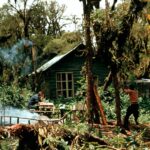
The Karisoke Research Center was unlike traditional laboratories. It consisted of simple cabins, basic research facilities, and a team willing to endure harsh mountain conditions in pursuit of scientific knowledge.
Researchers spent countless hours following gorilla families through dense rainforest, recording observations that transformed the study of great apes.
Dian Fossey’s Groundbreaking Research from Karisoke
Before Fossey’s work, relatively little was understood about mountain gorillas.
Her research demonstrated that gorillas: Live in stable family groups led by dominant silverbacks, develop lifelong social bonds, display empathy and affection, communicate through a wide variety of vocalisations and body language, show remarkable intelligence and problem-solving abilities, and care deeply for their young.
Her further discoveries included: identification of individual gorillas using unique nose prints.
These discoveries laid the foundation for modern primatology and helped inspire international support for mountain gorilla conservation.
What was the Daily Life at Karisoke Research Like?
Life at Karisoke demanded resilience, patience, and passion, yet was deeply rewarding.
Researchers often woke before dawn to begin searching for habituated gorilla families hidden within the dense forest. Days were spent hiking steep volcanic slopes, recording behavioral data, photographing individuals, monitoring group movements, infant development, supporting veterinary interventions, collecting ecological data, and documenting every aspect of gorilla life. Despite the challenging conditions, the work produced one of the longest continuous studies of any great ape species in the world. Living among the gorillas also allowed researchers to recognize individual personalities, emotional bonds, playful behavior, and complex family relationships that forever changed public perceptions of mountain gorillas.
These long-term observations created one of the world’s most valuable wildlife research databases.
The Famous Silverback Digit
The Mountain Gorilla Who Inspired a Global Conservation Movement
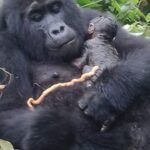
Digit was one of the most famous mountain gorillas ever studied at the Karisoke Research Center in Rwanda’s Volcanoes National Park. Born into Group 4, he was closely observed by renowned primatologist Dian Fossey, who admired his gentle nature, intelligence, and curiosity. As he matured into a powerful silverback, Digit developed a unique bond with Fossey and became one of the best-known mountain gorillas in the world through her research and photographs.
In 1977, Digit was killed by poachers while defending his family, a tragedy that shocked the international conservation community. His death became a turning point in the fight to protect endangered mountain gorillas, inspiring stronger anti-poaching patrols, increased global awareness, and greater support for gorilla conservation. In his memory, Dian Fossey established the Digit Fund, now known as the Dian Fossey Gorilla Fund, which continues to protect mountain gorillas through research, conservation, education, and community engagement. Visitors on the Dian Fossey Hike to the historic Karisoke Research Center can pay their respects at Digit’s grave beside Dian Fossey’s resting place, a powerful reminder of the sacrifice that helped secure a future for one of the world’s rarest great apes. Today, every responsible gorilla trekking experience in Rwanda and Uganda continues the conservation legacy that Digit helped inspire.
Karisoke and Gorilla Habituation
One of Dian Fossey’s most significant achievements was refining the process of gorilla habituation. Through years of patient observation and respectful interaction, gorilla families gradually accepted the presence of researchers without feeling threatened. Today, this approach allows carefully managed gorilla trekking experiences while maintaining the welfare of the animals.
Tracking gorillas in Rwanda reflects many of the principles first developed at Karisoke.
Karisoke and Mountain Gorilla Conservation
Karisoke quickly became more than a research station.
It became the centre of mountain gorilla conservation.
Research conducted here helped establish:
Karisoke Today
Although the original research cabins no longer stand, the legacy of Karisoke continues. Today, many of these conservation strategies continue across Rwanda Volcanoes National Park, Uganda in Bwindi & Mgahinga, and in Virunga National Park – Democratic Republic of the Congo.
Research and conservation efforts are now carried forward by the Dian Fossey Gorilla Fund, whose work includes: Anti-poaching patrols, Gorilla monitoring programmes, Responsible gorilla tourism, Veterinary care initiatives, Community conservation partnerships, and international scientific collaboration.
In 2022, the organization opened the Ellen DeGeneres Campus of the Dian Fossey Gorilla Fund near Volcanoes National Park, expanding research, education, and conservation while preserving the historic importance of the original Karisoke site.
Why Visit Karisoke Research Center Rwanda?
A visit to Karisoke research center/ hike to Dian Fossey’s grave offers much more than a scenic mountain walk; instead, visitors gain a deeper appreciation for mountain gorilla conservation, Insight into Dian Fossey’s remarkable life and work, Spectacular views of the Virunga Mountains, Rich rainforest biodiversity, Fascinating wildlife stories, and a meaningful historical experience.
For many travellers, it adds powerful context to their gorilla trekking adventure, both in Rwanda, Uganda & DR Congo.
Combine Visit to Karisoke Research Center with Other Experiences
The Karisoke Research Center is best explored alongside Rwanda’s iconic attractions.
Popular combinations include:
Gorilla Trekking, where you spend one unforgettable hour with a mountain gorilla family.
Golden Monkey Tracking to discover one of Africa’s rarest primates in the bamboo forests.
Mount Bisoke Hike to an extinct volcano and admire its breathtaking crater lake.
Gorilla Guardians Village Rwanda(formerly Iby’Iwacu Cultural Village) and experience traditional Rwandan culture while supporting local communities.
Kigali City Tour to explore Rwanda’s vibrant capital before or after your safari.
FAQ About Karisoke Research Center
Can you visit the Karisoke Research Center?
Yes. Visitors can reach the historic site on a guided Dian Fossey hike through Volcanoes National Park in Rwanda.
Do you need a permit?
Yes, you need a permit to do a Dian Fossey hike, which leads you to the Karisoke Research Center.
How long is the Dian Fossey’s Hike?
The hike typically takes 4 to 6 hours round trip, depending on trail conditions and fitness level.
Is Karisoke still operating?
The original research station is now a historic site. Conservation work continues through the Dian Fossey Gorilla Fund and its modern research facilities near Volcanoes National Park.
Is the hike suitable for everyone?
The trail is moderately challenging due to altitude and uneven terrain. A reasonable level of fitness is recommended.
Why Visit Karisoke/ Do a Dian Fossey Hike with Gorilla Hour?
Gorilla Hour creates immersive journeys that connect wildlife, history, and conservation.
Our Rwanda experiences include:
Gorilla trekking Safaris in Rwanda & Uganda
Dian Fossey hikes
Golden monkey tracking
Hike to Karisimbi and Bisioke Volcanoes
Tailor-made Rwanda & Uganda itineraries and across East Africa safari.
Every itinerary is carefully designed to offer meaningful encounters while supporting responsible tourism.
Walk Through Gorilla Conservation History with Gorilla Hour
The Karisoke Research Center is more than a historic landmark; it is the birthplace of a global conservation movement that helped save the endangered mountain gorillas. Every step along its forest trails reveals the dedication, resilience, and vision that continue to inspire conservationists around the world.
Whether you’re trekking gorillas, exploring the Virunga Mountains, following the story of Dian Fossey, or visiting the Karisoke Research Center, our Rwanda safaris offer an unforgettable connection to one of Africa’s greatest wildlife legacies.
Visit the historic Karisoke Research Center through the Dian Fossey Tour with Gorilla Hour and discover where mountain gorilla conservation changed the world one remarkable encounter at a time.