Challenges of Filming Primates in Uganda
Because filming primates in Uganda is done in nature with wild primates, there are challenges that come with it, from dense rainforests and unpredictable weather to fast-moving subjects and strict conservation regulations. Filmmakers must be prepared to adapt in the field.
- Low-Light Forest Conditions
Most primate filming takes place in the tropical forests of Bwindi Impenetrable National Park, Kibale National Park, Budongo Forest, Mgahinga National Park, and Kyambura Gorge.
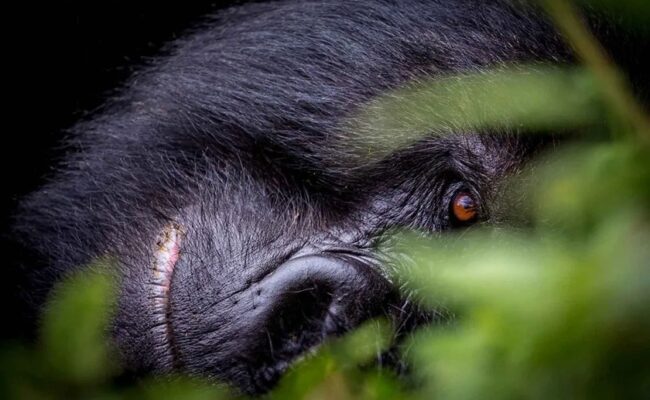
Dense canopy cover significantly reduces available light, making it challenging to achieve Fast shutter speeds, Low-noise footage, Sharp images, and high frame-rate filming.
Filmmakers are advised to bring fast lenses, high ISO capabilities, and excellent low-light camera performance.
- Unpredictable Animal Behavior
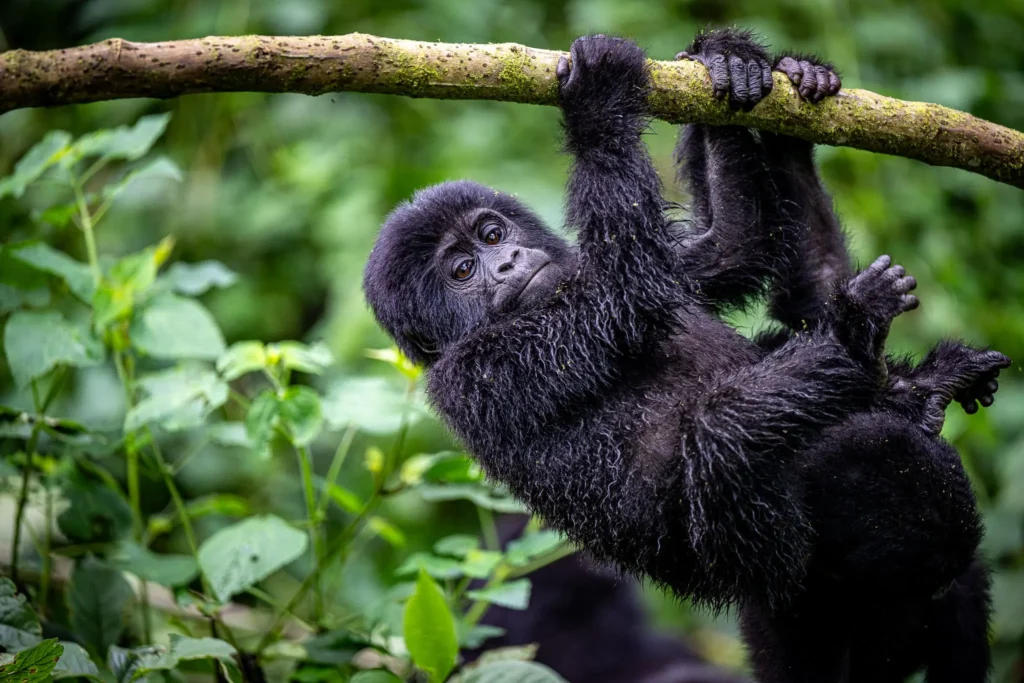
Primates are wild animals and rarely follow a script. Filming these wild primates in their natural environment is more rewarding. Beware of these challenges: sudden movements, Rapid changes in direction, climbing into dense vegetation, moving into difficult filming positions, and limited visibility.
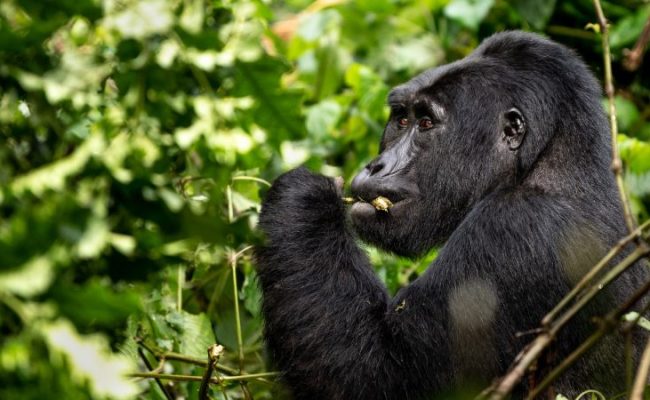
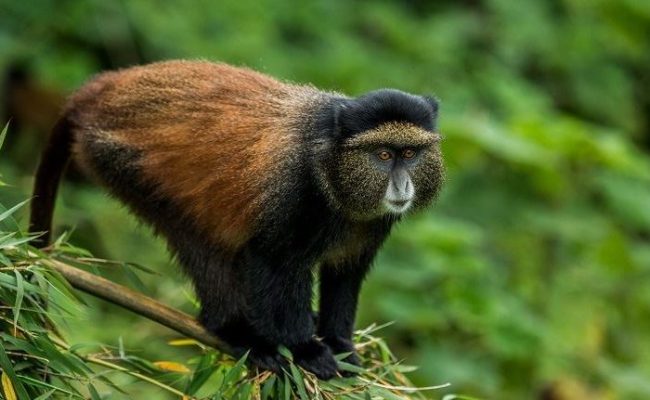
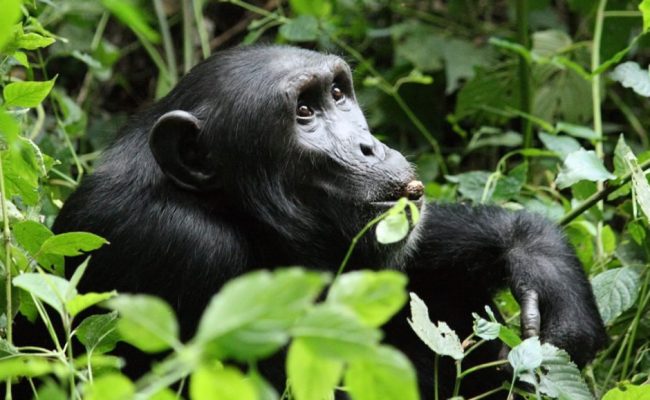
Chimpanzees and golden monkeys in particular can travel quickly through the forest canopy, making tracking and filming difficult.
- Dense Vegetation
Primate homes are typically forest environments, which frequently obstruct clear shots.
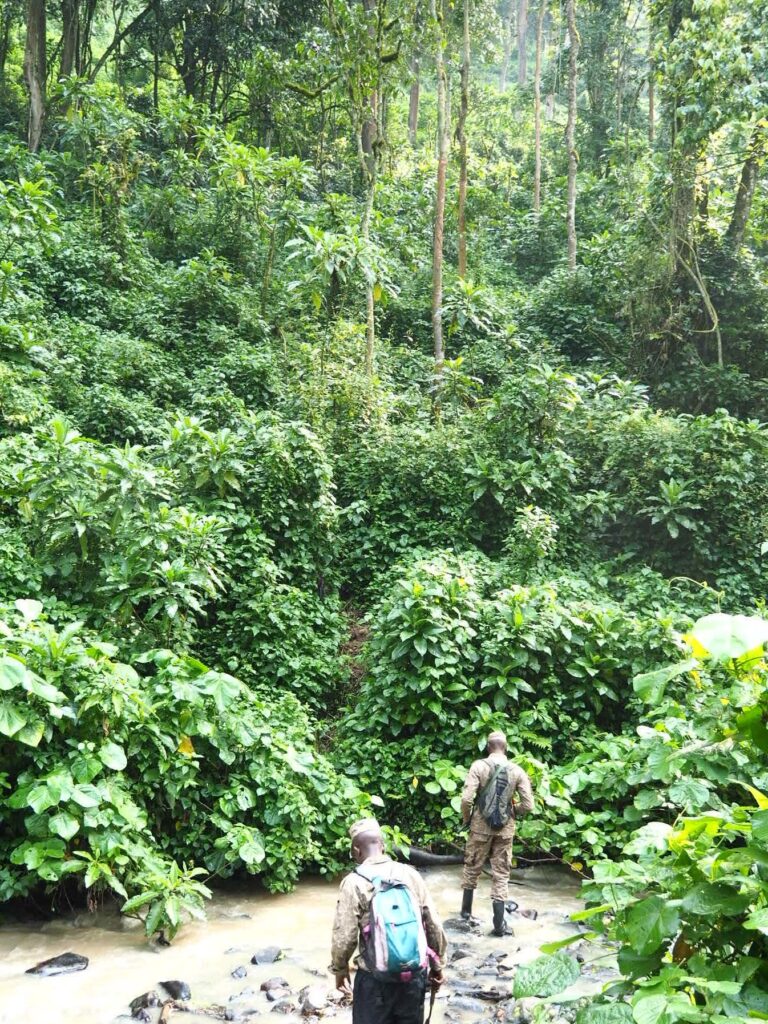
Obstructions come from thick undergrowth, hanging vines, Tree trunks, Branches and leaves, and Steep terrain, especially in Bwindi and Mgahinga.
- Weather and Humidity
Uganda’s tropical climate can create filming challenges; be prepared for sudden rain showers, muddy trails due to the rains, Lens fogging, Condensation on equipment, Moisture damage risks. Proper weather protection for cameras and electronics is a good idea, especially when in the misty forests in Bwindi & Mgahinga.
- Limited Time with Primates Per day
Standard permits usually allow a limited viewing period once primates are located. Both Gorilla, chimpanzee, and golden monkey encounters are restricted to 1hour. There is more provision for the habituation experience that gives you quality time, about 4 hours with the subject, so you get a chance for more shots. In case you require additional time with the primates, you need to purchase extra permits for the subsequent days.
- Physical Demands of Tracking
Finding these primates takes a lot of work, specifically in the case of mountain gorilla trekking and golden monkey trekking. Gorillas and golden monkeys live in the highlands, locating a family requires filmers to trek high through steep slopes, walk through dens forest, cross valleys, plus long hours in the forest. Carrying filming equipment under these conditions can be physically demanding. The good news is that there are porters available to help with the weight that you can not handle.
- Sound Recording Challenges
Capturing clean audio in the rainforest can be difficult due to Bird calls, Insects, Wind through vegetation, Rainfall, Other visitors, and trekking groups. Dedicated audio equipment and careful planning are often required.
- Strict Conservation Regulations
Tracking these primates is highly restricted with stringent rules and regulations all emphasized to protect the mountain gorillas, chimpanzees, and golden monkeys. Uganda Wildlife Authority prioritizes primate welfare above filming requirements.
Some of the Rules & Regulations include:
Maintaining a safe viewing distance of 7 meters
No use of flash photography or lighting
Restricted movement around animals, especially the gorillas
Limited group sizes to only Persons
With health and biosecurity requirements, you can’t track when you have a communicable illness.
.
These regulations are essential for conservation, but can limit filming options; therefore, prepare beforehand.
- Equipment Logistics
Another factor to consider on the primate filming safari is the equipment. A primate and filmmakers have to strike a balance between quality and portability. The biggest challenge is transporting equipment through the thick forest, protecting equipment from moisture, managing batteries in remote locations, carrying sufficient storage media, and generally maintaining the equipment in the field, but prior planning covers all this, making your filming safari successful.
Capturing Unique Behavior
The greatest challenge is often patience.
Filming meaningful moments such as Grooming, Social interactions, play behavior, Dominance displays, and mother-infant bonding requires extended observation and persistence.
Many of these factors that may make primate filming difficult are also what make it extraordinary. The misty forests, intimate encounters, natural behavior, and unpredictable moments create authentic wildlife stories that cannot be staged or replicated.
With proper planning in advance, and our local support, we in to, isall led to a successful and productive Primate filming safari in Uganda. Uganda offers some of the most compelling primate filming opportunities anywhere in the world.
From mountain gorillas and chimpanzees to golden monkeys and rare forest primates, Gorilla Hour Uganda helps filmmakers overcome logistical challenges and focus on capturing remarkable wildlife stories in the Pearl of Africa.
Timing Matters
The best filming conditions are generally during Uganda’s dry seasons: June to September, December to February.
These months offer easier trekking and more predictable weather, although filming is possible throughout the year.
Capture More Than the Primates.
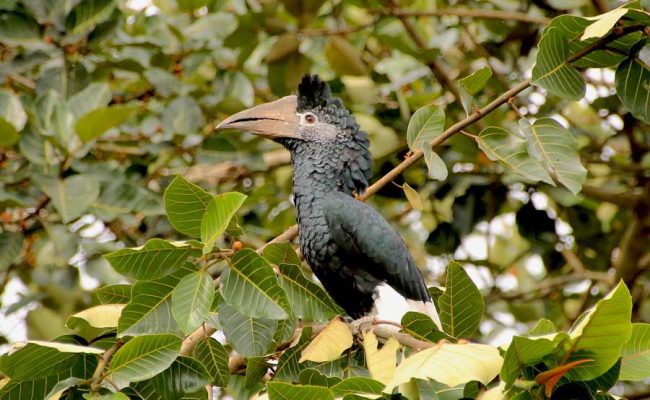
A compelling film often includes: Forest landscapes, Ranger activities, Conservation efforts, Wildlife and birdlife, trekking experiences.
Plan Well in Advance
Gorilla permits and filming permissions are limited and often sell out months ahead, especially during peak seasons. Early planning helps secure permits, accommodations, guides, and filming schedules.
A primate filming safari in Uganda is one of the most rewarding wildlife filmmaking experiences in the world. With mountain gorillas, chimpanzees, golden monkeys, ancient rainforests, and rich conservation stories, Uganda provides everything needed to create extraordinary wildlife footage and unforgettable visual storytelling.
Primate Filming Costs in Uganda
Filming costs in Uganda vary depending on the type of project, crew size, filming duration, equipment, locations, and permit requirements. Wildlife filming involving gorillas, chimpanzees, and national parks requires special permits and fees in addition to standard safari costs.
Key Costs to Consider
Filming Permits
The Uganda Wildlife Authority charges filming fees for commercial productions, documentaries, television programs, and professional content creation.
All filming fees are charged 40% of the activity and entrance.
Filming fee for drone usage will be charged 50% of the activity.
Plus 10% evironmental monitoring fee
Gorilla & Chimpanzee Permits
Separate wildlife permits are required for filming primates, which are secured before filming begins.
Safari Logistics
Typical filming safari costs include:
4×4 safari vehicle, Professional driver-guide, Fuel and park transfers, Accommodation, Meals, Park entrance fees, Ranger fees, and porters.
Specialized Filming Support
Additional services may include: Location scouting, Fixers and local coordinators, Porters, Equipment transportation, Translators, Conservation experts, Extra vehicle support
.
- Drone Filming
Drone operations within protected areas require special authorization and are subject to additional fees and restrictions. Approval is not automatic and must be arranged in advance.
Estimated Budget Ranges
Customized filming itineraries & Total Cost
Speak with the expert with the following specifications below for an accurate filming itinerary and costs;
Number of crew members
Filming dates
Desired locations
Type of production
Equipment list
Drone requirements
Expected duration
Our safari expert will contact you with a customized itinerary and quotation based on the specific requirements of your Primate filming safari in Uganda.
Contact Gorilla Hour Uganda for a customized primate filming safari quotation and permit guidance.